



Credit : Lars Huebner
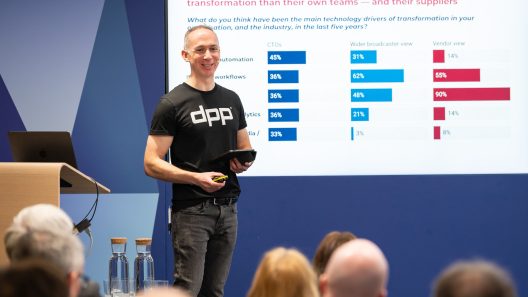
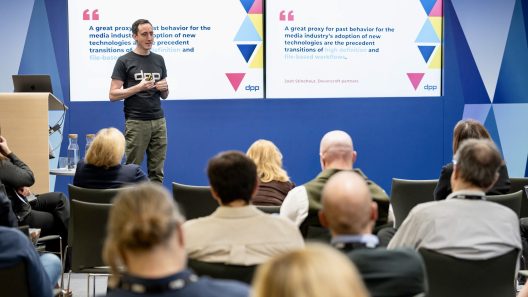
At DPP’s Production Now in Los Angeles this summer, investor Seth Hallen of Hallstone Ventures offered a compelling way of understanding how the economics of entertainment are changing - “Fandom is the new window.” For decades, the value of film and television was extracted through a sequence of release windows. Hallen’s argument was that value increasingly lies in the continuing relationship between IP and the audience that cares about it. He also questioned whether the industry is pointing AI at the wrong problem. Hollywood has been preoccupied with how AI might change the production of content, when perhaps its bigger impact will be on how audiences actually find the content in the first place.
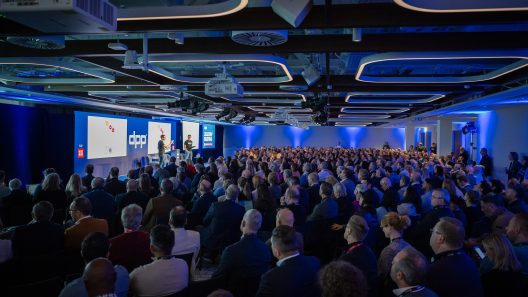
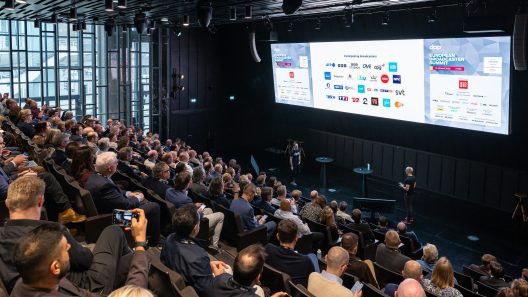
Two months later, at the MediaTech Hub Conference at Studio Babelsberg in Potsdam, I kept hearing conversations that seemed to take that idea a step further. If fandom is becoming one of the most valuable assets in entertainment, who controls the route between the content and the fan?
“If fandom is the most valuable asset, who controls the route to it?”
For most of television’s history, that route was relatively straightforward. Linear broadcasting had the schedule, multichannel television introduced the electronic programme guide, and streaming put increasing power into the homepage and recommendation engine. More recently, social media has added another layer, with audiences discovering programmes through YouTube, TikTok, Instagram and creators, often before reaching a broadcaster or streaming service. But now there is another potential intermediary: the AI agent.

Lilian Dammann, myne and Franziska Scholz, Gracenote. Credit: Lars Huebner
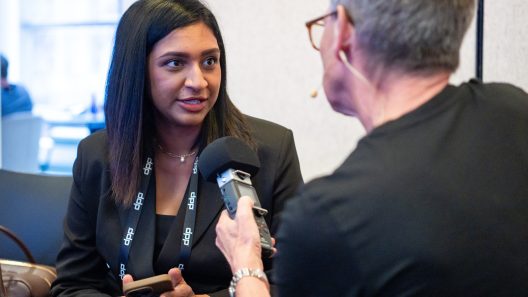
At Potsdam, Lilian Dammann, founder and CEO of myne and who previously spent more than a decade leading AI and data teams at German broadcasters BR and ARD, described the personal AI media agent her company is developing to curate news, podcasts, video and social media. One distinction she made really stayed with me: the difference between platform intent and user intent. Every platform has objectives of its own. A social platform wants engagement, a streaming service wants people to keep watching and subscribing while a broadcaster has programmes it wants to promote. But a genuinely personal agent could start somewhere else - the individual. Instead of opening Netflix, scrolling for a while, giving up, trying iPlayer and then perhaps searching YouTube, I could simply ask for what I actually want: “I’ve got 45 minutes. I’m watching with my nine-year-old. We want something funny and British, nothing frightening, and we don’t want to start a new series.”
“The difference between platform intent and user intent will redefine content relationships”
And we're already seeing the beginnings of this. Gemini on Google TV can already respond to conversational requests about what to watch, while Alexa+ is being used for conversational entertainment discovery. Natural language search is already possible and will only become more sophisticated. The difference may seem small, but it’s significant. A streaming service’s recommendation engine essentially answers the question - what should I watch here? But an agent could increasingly answer the more general question - what should I watch across all the platforms? In the first case, I have already chosen the platform. In the second, choosing the platform becomes part of the recommendation. The technology is increasingly capable of delivering the discovery experience audiences want, but the question remains whether the companies controlling the content will allow it.
This helped me understand why another subject kept coming up at Potsdam: metadata. It can sound like a fairly dry operational issue, but in this context metadata becomes essential to the consumer experience. Traditionally, systems needed to know a programme’s title, duration, genre and contributors. Streaming demanded richer information to support search and recommendation. But AI is taking that further. People don’t necessarily know the title of what they want to watch. We might want something funny but not silly, a 1990s film suitable for a ten-year-old, or the documentary where someone explains an event we vaguely remember. These are questions about meaning, mood and context rather than conventional search terms. AI needs to understand much more about what is actually inside the content.
This was central to the discussion between Dammann, Josephine Kittner of RTL+ and Franziska Scholz of Gracenote. Gracenote’s 2025 State of Play research, based on 3,000 consumers across six countries, found that viewers globally spend an average of 14 minutes looking for something to watch. Two-thirds of those surveyed said they would prefer a single guide or menu providing information about content across different services. An LLM may understand what I am asking for, but it also needs reliable information about what programmes exist, what they contain and where they are available. Content owners are already applying AI to their libraries to identify subjects, people, places and moments within programmes, rather than simply describing the programmes themselves. Suddenly metadata starts to determine not just how content is managed, but how it can be discovered.

Graham Haigh, ITV Studios and Gabby Redfern, Sky. Credit: Lars Huebner
The point became clearer the following day in a discussion with Graham Haigh of ITV Studios, Antonia Kerle of the BBC and Gabby Redfern of Sky about the UK’s transition from broadcast to streaming. Haigh described the opportunity sitting inside ITV Studios’ catalogue of more than 110,000 hours. Traditionally, we might think about such a library in terms of programmes, episodes and licensing opportunities. But social media is already showing that audiences don’t always discover archive content at programme level; sometimes they discover a tiny piece of it. Haigh gave a great example from the wildlife documentary series, River Monsters. A short clip featuring an extraordinary fish found a huge audience on TikTok, prompting his team to go back into the archive to find more material that could serve the interest developing around it.
This example is fascinating because it changes the way you think about the archive. A moment buried inside an old programme can suddenly find an audience of its own, creating a signal that sends the content owner back into the archive to find new value around that IP. It’s Hallen’s fandom argument playing out in a very practical way. Now imagine the same process when machines can understand not just programmes and episodes, but individual scenes and moments. A 110,000-hour archive potentially contains millions of moments involving different people, places, subjects and events that could be surfaced in response to what an audience is interested in. Broadcast organised content around channels and programmes. Streaming increasingly organised it around titles and individual users. Social media has shown the power of the moment or clip. AI could add another dimension by understanding the audience’s intent.
In the streaming era, metadata helped audiences find content, but in an agentic era, metadata may increasingly help content find audiences. If I can tell an agent what I want, and it can search multiple services, I may never meaningfully encounter the streaming service’s homepage. I don’t see the hero image it has selected, browse its recommendations or necessarily encounter the new programme it wants me to watch. The service may still provide the programme, but it has much less control over why I chose it.

Marion Ranchet, Streaming Made Easy. Credit: Lars Huebner
In light of all this, Marion Ranchet’s opening keynote at Potsdam feels particularly relevant. The founder of Streaming Made Easy called her presentation You Own the Trust, You Rent the Rails. Her argument was about European media sovereignty, but it applies here too. Broadcasters still own incredibly valuable assets such as content, IP, archives, brands and audience trust. Yet many of the routes through which those assets reach audiences, from connected TV interfaces to social platforms and search, are controlled by somebody else. Ranchet argued that media companies need to think about prominence as a product strategy rather than simply a regulatory entitlement. After all, being available is not the same as being discovered. In linear television, prominence could mean a good channel position. In connected TV it might mean a prominent app tile. But what does prominence look like when somebody simply asks an AI what to watch?
Broadcasters and streamers have good commercial reasons to keep audiences within their own environments. Their homepages and recommendation engines promote programmes, build loyalty, retain subscribers and generate revenue. They have resisted giving up that control, even as audiences have demonstrated their appetite for simpler discovery across services. But AI could make that resistance increasingly difficult to sustain. YouTube already operates through search, recommendations, creators and communities rather than a conventional broadcaster’s schedule or a streamer's curated catalogue. It is not difficult to imagine it moving further towards conversational AI discovery.
Traditional broadcasters and streamers could therefore face an uncomfortable choice: make their content accessible to AI agents and risk losing control of the audience relationship, or keep it within their own environments and risk becoming less relevant. Either way, the commercial model they have spent years building could come under real pressure.
“What happens when making content easier to discover means giving up control of the audience relationship?”
But perhaps the biggest question is who owns the agent in the first place. Netflix knows what I do on Netflix. ITV understands my behaviour on ITVX. A general-purpose AI agent could know my interests, subscriptions and viewing habits across multiple services, as well as who I am watching with. That could make it extraordinarily good at choosing what I watch, while giving whoever controls it enormous influence over how audiences spend their time and money. Content owners might still supply the programmes, but what happens to their advertising, subscription and customer relationships if somebody else controls discovery?
Which brings us back to Hallen. If fandom is the new window, the relationship between content and audience has never been more valuable. But being discovered is not the same as owning that relationship. Broadcasters and streamers have spent the past decade building direct-to-consumer platforms precisely to bring audiences closer to them. Now they may find themselves having to surrender some of that control simply to remain visible. AI could finally give audiences the freedom to discover content across services in the way they actually want. The question is whether the industry's existing business models can survive it.