
And what it means for rest of the media supply chain
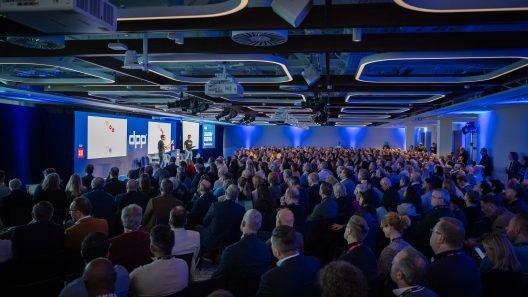
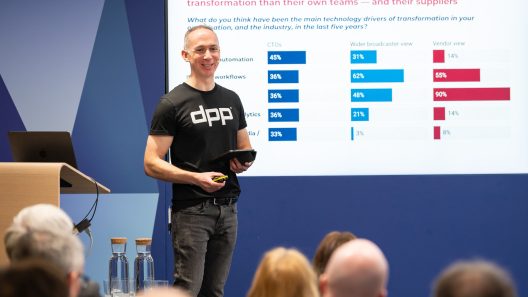
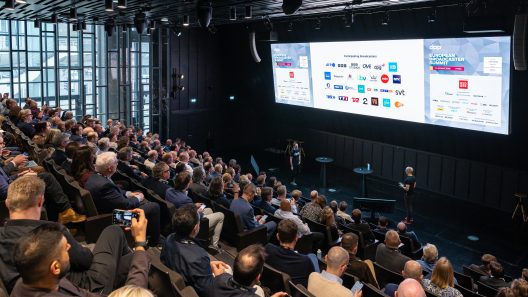
On August 13th the DPP partnered with United Talent Agency (UTA) to host Production Now. It was a one-day conference in Los Angeles that brought together senior leaders from both the established media economy and the new one: Hollywood studios and creator studios in the same room, talking to each other.
It was a closed event, which ensured honesty and openness from the participants – but means I can’t report what individuals said.
But I feel I do have to share the story that emerged from the day. Not because it was a day of consensus. Far from it – there were plenty of moments that one contributor described as ‘spicy’. No, I have to share because there was nevertheless a clear narrative that completely reframes much of the discourse about the new content economy.
It was a narrative about how unfamiliarity has been mistaken for unrest; how technology innovation has been mistaken for technology disruption; and how the coming force in media and entertainment is not the machine, but the human.
In with the old, in with the new
For many years those of us working in the media and entertainment industry have lived comfortably with a model that – for all its faults - has felt familiar and well understood. But when, in the space of just a few years, the talk switched from movies and TV to content and experiences, we seemed to lose our bearings.
Not only that, but our disorientation occurred in parallel with the emergence of a new technology: AI. It was easy to assume these two things somehow went together: a new business model and a new technology.
But what became clear as I listened to our brilliant contributors to Production Now is that the reality is far less binary. Change has been additive far more than it’s been substitutional. And it's in these additions that the magic lies.
Almost everything that has existed for decades, is still around. It’s just that it has been joined by a huge amount that is new. The totality is something complex and at times confusing. But it’s full of opportunity.
For those that can grasp it.

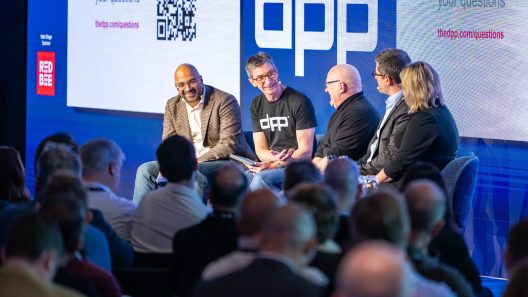
Sean Atkins, Dhar Mann Studios & Paul Cheesbrough, Tubi Media Group. Photo Lars Hübner
The new model
To understand how the established model of media and entertainment has changed you have to understand how the value chain has been reorganised.
For many years, and in most territories, a small number of major players owned or dominated the end-to-end value chain – creation, curation, distribution, community, and monetisation.
What has happened now, as one of our speakers expertly explained, is that the value chain has become layered, with different specialists at each layer. The idea of total ownership and control is not simply anachronistic, it’s bad business.
There are many reasons for this new layering, but perhaps the most important is the democratisation of the creative process. Access to the means of production has not only brought new voices, but it’s also brought new ways of building community. And with those communities come new ways of doing business.
But here’s the thing. The emergence of new business models for new voices hasn’t led to something inherently superior replacing something inferior from the past. The established models remain as relevant as ever: no-one knows how to make and market a blockbuster movie like a Hollywood studio; and no one knows how to deliver social value like a public service broadcaster. The term ‘legacy’ is truly inappropriate when prefixed to established media organisations. Those organisations still have plenty of currency. Their challenge is not how to switch to the new; but how to meld with it.

Paul Nicholson, Adobe and Michelle Huynh, Fox Entertainment. Photo Lars Hübner
Many have talked of the moat of exclusivity which Hollywood has built around itself, and how that moat is now getting breached. But this language isn’t quite right. It’s more that bridges are being built, from both sides. Perhaps slightly more are currently being built from without than within, but that looks set to change pretty quickly. And the metaphor might soon more accurately be one of infilling a moat than traversing it.
Defining media and entertainment
Ever since the first video was uploaded to YouTube in 2005, there has been content as diverse as user generated video and big budget movies.
But that content wasn’t on a spectrum. And no one who made movies – or indeed TV – thought of UGC as media and entertainment.
It’s very different today. Now there is truly a continuum. In many respects entertainment is in the eyes of whoever is watching whatever.
But if there is one thing that defines professional content, and separates it from the mass, it is the relentless drive towards greater quality and greater scale.
This became apparent in the First Great Content Disruption provided by streaming. Major streamers very quickly began to create content with production values and budgets only previously seen in the movies. But now, as each new content form and experience emerges, we see an inevitable push towards higher quality, bigger budgets, and larger audiences. It’s true of creator content, podcasts, live experiences, and immersive content. Lower cost niche specialisms, focusing on authenticity, will always remain – and may be profitable. But bigger and better comes to everything.
This tendency invites the co-existence of numerous commercial models, each tuned to a different area of content excellence. And that in turn creates more opportunity – but also pulls both brand and consumer expenditure all over the place. The same person paying $250 for a ticket to a real-life experience may on the same day be cancelling a $10 streaming subscription.

Josh Small, Blumhouse Atomic Monster; Thai Randolph, Nile & Co; Colin Rosenblum & Samir Chaudry, Colin & Samir. Photo: Lars Hübner
We talk less now of ratings and overnights and more of an ‘attention economy’ and an ‘experience economy’. But perhaps the greatest measure of success is the creation of a cultural moment. Such moments may occur within a sub-community of a particular part of the fragmented entertainment ecosystem. But truly successful ones can break through into mainstream awareness. People who have barely used YouTube came to know about Backrooms. These are water-cooler moments on a global scale.
True cultural impact is a lot more than just a viral hit. Moments are not memes. They bring a sense of connection that, temporarily at least, makes media no longer feel fragmented; and social groups feel less disconnected.
And that’s why they have such value – both commercial and cultural.
This is a perfect example of how the new and older worlds bring their respective strengths, to the benefit of each other. The creator economy may be particularly effective at generating cultural moments; but established players have better machinery for optimising them.
The voice of the creator economy
One of the reasons the creator economy generates cultural moments is that creators don’t have gatekeepers. For generations, media organisations have taken pride in their gatekeeping role. Many still do - with communications departments retaining a strong control over all messaging, and a walled garden standing between creatives and their audience.
But those same organisations are quickly learning that if they want to work with talent from the creator economy, they must give them creative and editorial freedom.
Where once the creation of a walled garden was seen as essential for brand building and commercial success, now content that is distinctive, authentic and easily discovered is recognised as an alternative route to market.

Sasha Lloyd, A24; Fede Goldenberg, YouTube; Alessandra Catanese, Smosh; Billy Parks, Fox Creator Studios. Photo: Lars Hübner
Creative talent needs to own and manage its relationship with its audience. And in this world of audience-first decision making, data generation is inseparable from content generation. It encourages entrepreneurialism in the creator – an entrepreneurialism that makes those creators inherently more strategic than a typical creative from the era of movies and TV.
This is not to say that all creators are entrepreneurial, however. And here once again is how and why existing and new cultures are becoming enmeshed. There are plenty of quieter original voices who need and want others to amplify them.
It’s one of the reasons why we now have creator studios, just as we have movie studios. Almost every great storyteller needs a team to get that story heard. And paid for.
AI doesn’t make the story
Pretty much everything in this story so far has taken place without AI. Now, as the story unfolds into the future, AI will have a role as a key enabling tool, both of creativity and commerciality. But it won’t be the story, or the storyteller.
From the conversations about AI at Production Now it felt as if the refinement of the technology and its place within the media toolset will advance at roughly the same pace as the consumer backlash that will protect the voice of the creative. While lawyers and regulators will agonise about how to distinguish the role of the human from the role of the machine in the generation of content, consumers will most likely work it out for themselves, according human creativity even greater value than ever.

Seth Hallen, Hallstone Ventures. Photo: Lars Hübner
As our opening keynote speaker, Seth Hallen, observed, Hollywood has been obsessed about how AI might shape the frame, while the real significance of AI will be in how it helps consumers to find the frame. And the frame they’ll want to find will be the frame that expresses the distinctive voice of a human storyteller.
The human judgement premium
The distinctive voice of the human storyteller is what brings us to the conclusion of the Production Now story.
As the role of increasingly smart automation grows, human judgement, artistic direction, and originality, will become the definitive differentiator in content value.
This will be true at every stage of the process, from script to screen.
There’s an irony here. Content is easier to create than ever. And more people than ever can share their stories. But the effect of that isn’t mediocrity; it’s the reverse.
In a world of plentiful stories, the best are hard to find. That makes them worth more, and ensures curation becomes an essential service.
The companies that thrive – in every layer of the value chain – will be those that already have, or can build and maintain, trust. It will also be those that sidestep any legacy technology and culture by finding a way – through acquisition, divestiture, reorganisation or partnership – to deploy their specialist skills quickly and effectively.
As one of our speakers observed, we aren’t in a crisis. We’re in a golden age.