


After more than 20 years producing and directing television documentaries, I thought I understood audiences reasonably well. I was wrong.
Like many commissioners, producers and executives, I took it for granted that if we made compelling programmes, audiences would naturally find them. In a world where broadcasters largely controlled both distribution and discovery, it was often true. But today's content landscape is being reshaped so fundamentally that many of those assumptions no longer hold. Despite having more audience data than ever before, the media industry may actually understand its audiences less well than at any point in its history. How did this happen?
Understanding the changes in audience behaviour is becoming one of the most important strategic challenges facing media companies today. While television remains central to many of the biggest cultural moments, viewing now takes place across YouTube, streaming services, social video, podcasts, games and creator-led content. The result is not simply a more fragmented television market, it is a new content economy in which production, distribution, discovery and monetisation increasingly take place across different platforms and business models. As audiences move more fluidly between those platforms, understanding the full audience journey has become not only more important, but significantly more difficult.
In the traditional television model, distribution and discovery were closely connected. Channel position, programme schedules and marketing campaigns provided the principal routes through which viewers found programmes. Today, audiences may begin with a broadcaster app, streaming service, YouTube, social feed or connected TV homepage before eventually watching somewhere else. Hub Entertainment Research illustrates the scale of this change. Its surveys have found that only 35% of 18–24-year-olds now begin their search for entertainment with traditional television, while more than half start with creator video.
This shift creates a significant challenge for measurement. Broadcasters measure reach and viewing. Streaming services monitor starts, completion and retention. Social platforms report impressions, engagement and sharing. Advertisers measure exposure, conversion and commercial outcomes. Each organisation generates valuable data, but each sees only part of the audience journey, and is therefore unable to capture the complete decision-making process. Hub Entertainment Research found that 84% of 18–24-year-olds first hear about new television programmes through social media, illustrating how discovery increasingly happens outside the platform where viewing eventually takes place. A recommendation from a friend (or even a stranger) on social media may lead to a YouTube clip, which prompts a search before a programme is finally watched on a streaming service or broadcaster.
Without understanding that complete journey, it becomes much harder to understand why viewers choose that content in the first place, and what role it played in their lives. People no longer turn to video simply to be entertained. They move between drama, news, creator content, podcasts and tutorials throughout the day for information, learning, companionship, entertainment and community. Platform data can tell us what people did, but it cannot always explain why they did it - or why it mattered. Established audience metrics remain essential, but they do not always capture these behavioural differences.
Measurement organisations are beginning to respond. Nielsen's The Gauge and Media Distributor Gauge provide complementary views of television consumption in the United States. Ofcom increasingly takes a cross-platform view of audience behaviour to understand total in-home viewing, while in July 2025, Barb became the first audience measurement organisation to report television-set viewing for selected YouTube channels alongside broadcasters and streaming services.
These developments broaden independent measurement, but significant gaps remain. The industry still lacks a consistent understanding of how audiences move between short-form and long-form video, how social discovery influences later viewing, when audiences are actively attentive rather than passively consuming content, and how different viewing contexts affect behaviour. As audiences change how they discover, consume and value content, production itself must adapt - from the formats that are commissioned to the workflows, technologies and business models that support them.
So what does the industry need next?
Today, the challenge is less about collecting more data and more about connecting the evidence that already exists. Better measurement matters, but it is unlikely to remove the uncertainty that now characterises audience behaviour. If anything, the opposite may be true. As the relationship between content, technology and human behaviour becomes more complex, interpretation becomes even more valuable.
A better understanding of the audience can inform which content is commissioned, how intellectual property is developed, where programmes are distributed and how audiences are marketed to. It can also improve advertising decisions, rights valuation and the development of new revenue models. After all, what the industry can measure influences what it values - and what it values influences where it invests.
That presents an intriguing irony. Just as the industry has more data than ever before, understanding audiences may depend more heavily on judgement, curiosity and cultural intuition. Good research remains essential. But so too does the ability to recognise patterns, understand culture and make creative leaps that no dashboard can yet explain. A good hunch may never have been more valuable. After all, this is what makes certain creators so effective. Their direct relationship with their audience gives them real-time data that is both quantitative and qualitative. It’s one reason why platforms such as Tubi and Fox are increasingly partnering with creators who bring deep audience insight.
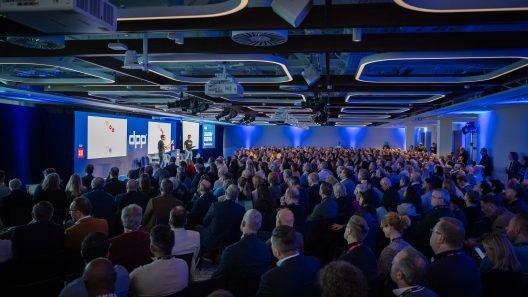
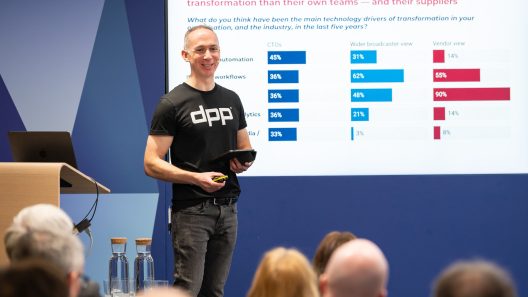
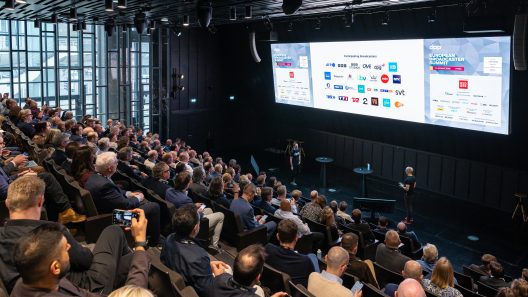
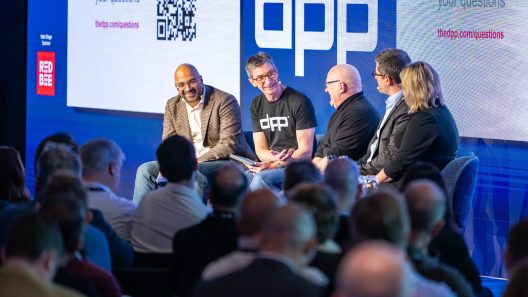
The old content economy was built around measuring programmes. The new content economy demands that the industry understand behaviour - how audiences discover content, why they choose it and how they move between platforms to consume it. Looking back at my own career, I realise how much audience behaviour remained hidden from view. In preparing for the DPP’s forthcoming Production Now conference I have been speaking with many of the leaders shaping the future of media. It has reinforced just how much more complex audience behaviour has become - and how much more there is still to learn. In the years ahead, the organisations with the deepest insight into their audience will have the clearest competitive advantage.
Register for Production Now at UTA on 13 August here.
